

Vineyards, morning silence, and rediscovering the joy of doing nothing
I had been moving too fast for months — city noise, crowded trains, emails, lists. So when I arrived at a small family-run farm just outside Montefalco, I wasn’t sure what to expect. Slowing down felt unfamiliar.
But in Umbria, the land doesn’t ask. It invites. And over a few quiet days, I remembered how to listen, how to breathe, and how to truly enjoy time — not fill it.
The Arrival
The gravel path to the farmhouse was lined with cypress trees and golden fields. I was greeted by the scent of lavender, the distant hum of bees, and the quiet smile of the host, Lucia.
She showed me to my room — stone walls, terracotta floors, a window overlooking rows of Sagrantino vines. No television, no music, just the soft rustle of leaves.
“I’ll see you for dinner,” she said, then left me alone with the view.
The Rhythm of the Farm
The days fell into a rhythm I hadn’t planned but quickly came to love.
- Mornings began with fresh bread, sheep’s milk ricotta, and Lucia’s fig jam
- Mid-mornings were for walking between the vines, watching the farm dog chase birds
- Afternoons meant reading in the garden or helping harvest vegetables
- Evenings always ended with long dinners under the pergola — homemade pasta, red wine, good conversation
There was no Wi-Fi signal in my room, and I didn’t miss it.
The Beauty of Doing Less
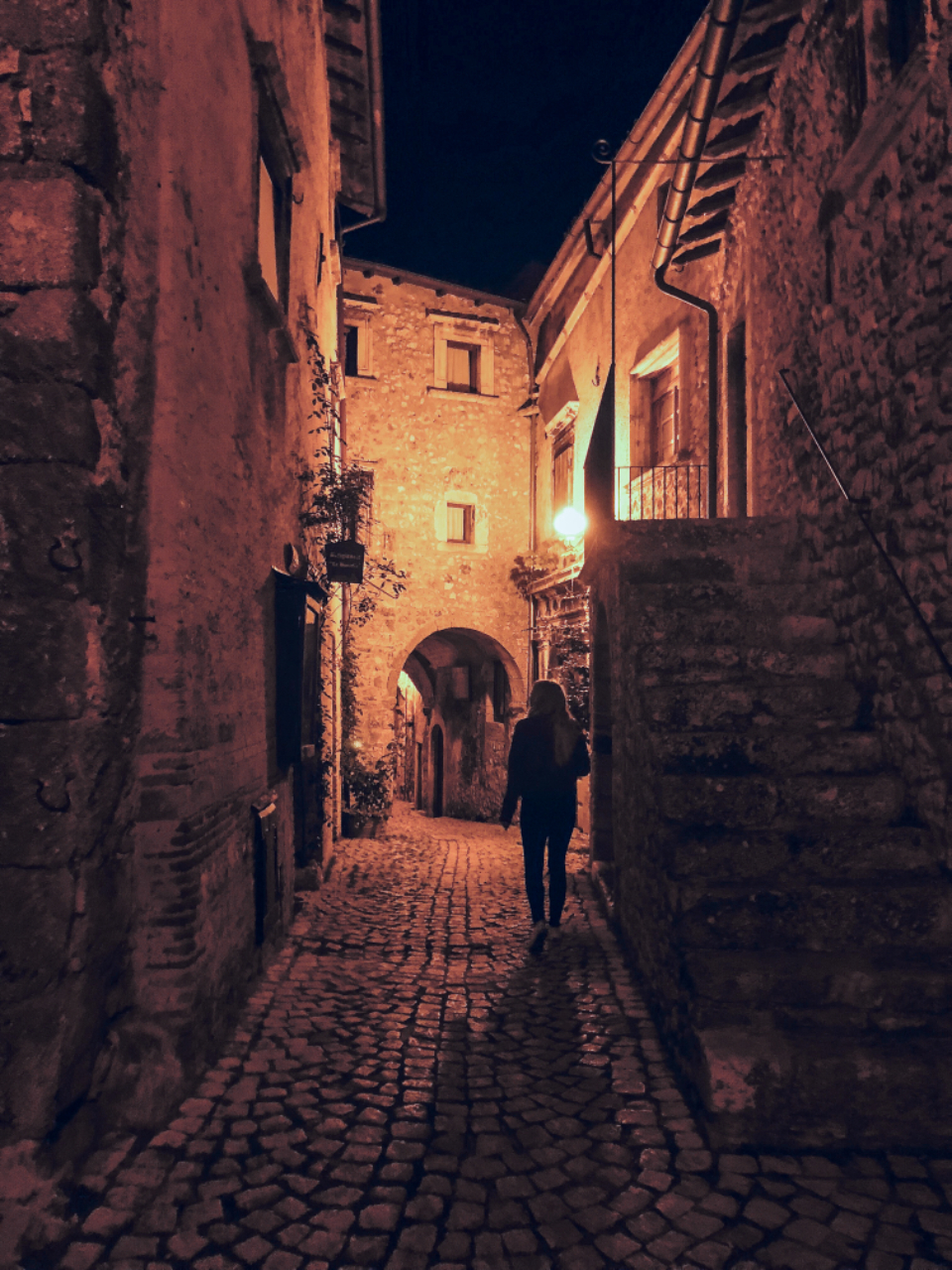
Montefalco was just a few minutes away by car, and I visited twice — wandered the small streets, tasted local wines, watched the sun set from the city walls. But most of the time, I stayed on the farm.
I wrote in a journal I hadn’t touched in years. I watched clouds change shape. I ate slowly. I felt my breath slow down.
I had come for a place to sleep and ended up finding a new pace of life.
Lessons I Took Home
- Stillness is not emptiness — it’s presence
- Food tastes better when you know where it comes from
- Time is richer when it isn’t filled
- Connection doesn’t require words — sometimes just silence, shared around a table
Harvest Morning
On my third day Lucia asked, almost apologetically, whether I would like to help. The Sagrantino was ready. It is one of the last grapes in Italy to be picked, usually well into October, because its thick skins need every day of autumn sun. By eight o’clock a dozen of us were spread along the rows: her family, two neighbours, a cousin home from Perugia, and me with a pair of borrowed secateurs.
The work is simple and repetitive. You cut each bunch at the stem, drop it into a small plastic crate, and move on. The crates hold about fifteen kilos, small enough that the grapes at the bottom are not crushed, and every hour or so a tractor comes down the row to collect them. Nobody hurried, but nobody stopped either. The talk was in dialect and mostly about other years: the hail in 2018, the drought two summers ago.
At noon we ate in the vines. Bread, a wheel of pecorino, slices of cold frittata, tomatoes, and last year’s red poured from an unlabelled bottle. Lucia’s father, who must have been eighty, told me through his granddaughter that he had picked this same slope every October since he was six years old. I had purple hands, a sore back, and no wish to be anywhere else.
An Afternoon in the Cellar
Later that week Lucia’s husband took me down into the cellar, a low vaulted room under the barn where the air smelled of wet stone and wood. He explained, patiently, what makes Sagrantino different. The grape grows almost nowhere outside this small ring of hills around Montefalco, and it holds more tannin than any other variety in Italy. Young, it is almost undrinkable — he laughed and poured me a taste from a barrel to prove it, and my mouth turned to sandpaper. The law requires it to age at least three years before it is sold, part of that in wood, and most producers give it longer.
Then he opened two finished bottles. The dry version, dark as ink, tasted of blackberry, tobacco and something like church incense, and it wanted food — the roast pork we would eat that evening. The second was the passito, made from grapes dried on racks for weeks until they shrivel, sweet but not heavy. For centuries, he said, this was the only Sagrantino anyone made, a wine for Easter lamb and for priests, and the dry style is barely fifty years old. A bottle of the dry one from a small producer costs roughly 20 to 40 euro at the farm gate; the passito, in half bottles, about the same.
Walking Up to the Town
On my last afternoon I left the car where it was and walked to Montefalco instead: forty minutes uphill on a white gravel road between vines and olives, with the town growing larger at every bend. It was worth arriving slowly. Montefalco is called the balcony of Umbria, and from the ring road that circles its walls you can see Assisi, Spello, Trevi and Spoleto all at once, laid out on the far side of the valley like towns on a map.
Inside the walls I went to the old church of San Francesco, now the town museum, to see the frescoes that Benozzo Gozzoli painted in 1452 about the life of Saint Francis. The entry fee was a few euro and I had the room almost to myself. One panel shows the saint preaching to birds on a hillside that looks exactly like the one I had just climbed. I walked back down in the last light, in time to set the table under the pergola.
Final Thoughts
Staying on that farm near Montefalco wasn’t dramatic. There were no grand events or bucket-list moments. But it was real, rooted, and unforgettable.
In a world that pushes us to do more, go faster, and check more boxes, Umbria reminded me to just be. And that, I’ve realized, is the most important travel memory of all.
