
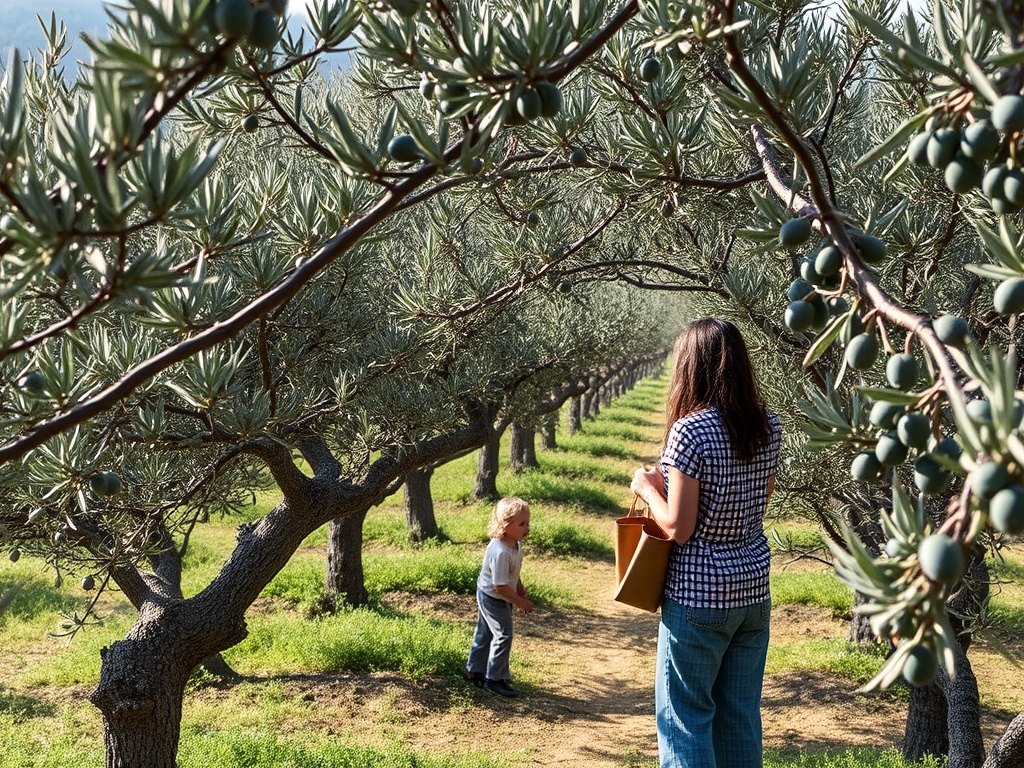

Sunrise Over the Olive Groves
As the first rays of sun stretch over the rolling hills of Umbria, the olive groves shimmer with dew. The air is crisp, scented with wild herbs and earth. This is the beginning of a typical day on a traditional olive farm nestled in the heart of central Italy.
Life here follows the rhythm of the land. The farmers rise early, not out of necessity, but out of a deep connection to nature’s clock. Their work is not just a job—it’s a heritage passed down through generations.
The Morning Routine: Tending to the Trees
After a hearty breakfast made with local bread, cheese, and—of course—extra virgin olive oil, the farmers head out to the groves. Their first task? Inspecting the trees. **Maintaining olive trees is an art form**, requiring a watchful eye for signs of disease, pests, or overgrowth.
Pruning is done with care, shaping each branch to allow sunlight and air to reach the fruit. This sustainable approach supports the longevity of the trees, some of which are over a hundred years old.
Tools of the Trade
- Hand pruners and curved saws
- Organic compost and manure
- Traditional baskets for harvest
Modern machinery is used sparingly, mostly during harvest season, in order to preserve the delicate balance of the ecosystem.
Midday Break: A Taste of Umbria
By noon, the work pauses. In true Umbrian fashion, lunch is a celebration of the land. Meals are often shared outdoors, under the shade of olive trees.
Typical dishes include:
- Homemade tagliatelle with truffle oil
- Grilled vegetables from the garden
- Local pecorino cheese and cured meats
- A glass of Sagrantino wine
These meals are not just fuel—they are a reflection of Umbria’s rich gastronomic identity. According to National Geographic, the region is considered Italy’s “green heart,” celebrated for its slow food traditions and artisanal products.
Afternoon: Harvest and Pressing
In the harvest season, afternoons are spent collecting the olives. Workers move swiftly through the groves, plucking ripe fruit by hand or using small rakes to coax them onto nets spread on the ground.
Time is of the essence: **the olives must be pressed within hours** to preserve their flavor and nutritional value. At the farm’s frantoio (olive mill), the fruit is washed, crushed, and cold-pressed into oil—a process that dates back thousands of years.
As noted by the Food and Agriculture Organization, extra virgin olive oil retains high levels of antioxidants and healthy fats when produced using traditional methods.
Evening Reflections
As dusk falls over the hills, the day winds down with quiet satisfaction. The sky turns shades of lavender and gold. Farmers gather with family or guests, sharing stories and a bottle of oil from the day’s press.
For visitors, this is a chance to experience something rare: a lifestyle rooted in respect—for nature, tradition, and community. It’s not just about the oil; it’s about what the oil represents—connection, patience, and authenticity.
The Rest of the Year: An Olive Farmer’s Calendar
The harvest day is the one visitors see, but it is the last act of a long year. Serious pruning happens from late January to March, once the risk of hard frost has passed. Umbrian growers remember the winter of 1985, when a deep freeze killed or cut to the ground a large share of the region’s trees, and many of the low, bushy groves you walk through today regrew from those stumps. Pruning is heavy every second year and light in between, and the brush is burned or chipped on the spot.
The trees flower in late May, small and cream-coloured and easy to miss, and a dry, windless week then matters more than anything the farmer does. By June the fruit has set, and the summer becomes a watch for the olive fruit fly, whose larvae tunnel into the olives and ruin the oil. Farmers hang traps, check them weekly, and in a hot, wet August may pick a little early rather than lose the crop. September is for repairing nets, servicing the rakes and booking a slot at the mill. December, after the press, is the only quiet month.
- The main cultivar: Moraiolo, a small, cold-hardy tree that gives the region’s bitter, peppery oil; Frantoio and Leccino are grown alongside it for balance.
- Picking early: many farms harvest at invaiatura, when the olives are just turning from green to purple. The yield is lower, but the oil is greener, more pungent and keeps longer.
- Yield: a mature tree gives anywhere from 15 to 40 kilograms of olives depending on the year, and the trees tend to alternate a heavy crop with a light one.
Inside the Frantoio: What Those Few Hours Involve
Most small farms do not own a mill. They deliver crates to a village frantoio that presses for dozens of neighbours in turn, charging by the quintal, and during the season the mill runs from morning until well after midnight. Leaves are blown off, the fruit is washed, and the olives are crushed whole, stones included, into a paste. That paste is then slowly stirred for half an hour or so at a temperature kept under 27 degrees, which is what the words cold extraction on a label actually mean. A centrifuge separates oil from water and pulp, and the oil comes out cloudy and bright green.
The figure everyone waits for is the resa, the yield: roughly 12 to 18 kilograms of oil per 100 kilograms of olives in a normal Umbrian year. Farmers compare it the way others compare exam results. A high yield from very ripe fruit gives a mild, buttery oil that fades quickly; a low yield from early-picked fruit gives the sharp oil the region is proud of. The farmer chooses, every year, between quantity and character.
New oil is left to settle for a few weeks in steel tanks before it is bottled or, more often, poured into five-litre tins for the family and for guests. At the farm gate it usually sells for somewhere between 12 and 20 euros a litre. Visitors during Frantoi Aperti in November can watch the whole sequence, and the bread with the first oil is offered freely; the only thing asked in return is that you cough politely when the pepper hits.
Why It Matters
Choosing to visit or support an olive farm in Umbria is more than a culinary experience—it’s a way to engage with a timeless culture. These farms are guardians of biodiversity, stewards of the land, and keepers of a way of life that prioritizes quality over quantity.
Whether you’re planning a visit during the harvest festival or dreaming of tasting golden oil straight from the press, remember: every drop tells a story of sun, soil, and soul.
