
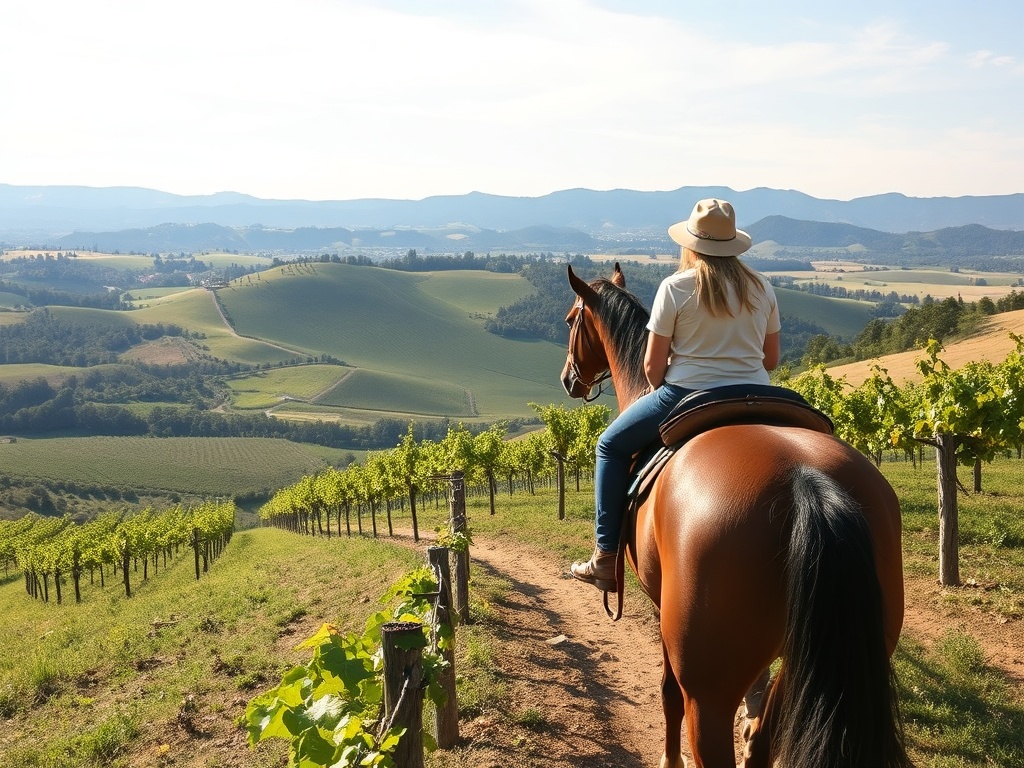

Explore Umbria on Horseback: A Journey Through Time and Taste
Imagine winding trails through sun-kissed vineyards, the rhythmic sound of hooves on ancient paths, and the scent of wild herbs filling the air. In the heart of Italy, Umbria offers an extraordinary way to reconnect with nature and tradition: horseback riding through its rural valleys and wine-growing landscapes.
Why Choose Horseback Riding in Umbria?
Umbria is often called the “green heart of Italy” — and for good reason. Its lush hills, medieval villages, and family-run farms create the perfect backdrop for slow, immersive travel. Exploring the region on horseback allows you to experience its rhythm, culture, and flavors in a deeply authentic way. Unlike driving or cycling, riding a horse lets you access remote trails and discover hidden gems off the beaten path.
Vineyards, Olive Groves, and Medieval Trails
Many horseback tours in Umbria are designed to take you through working vineyards and centuries-old olive plantations. Riders can stop at family-owned cantinas to taste local wines such as Sagrantino or Grechetto, and learn firsthand about the region’s winemaking heritage. Along the way, you’ll pass through medieval hamlets, where stone houses and cobbled streets whisper stories from another era.
Highlights of the Ride
- Guided visits to organic farms producing cheese, truffles, and honey
- Riding through oak forests and sunflower-filled fields
- Authentic Umbrian lunches prepared with farm-fresh ingredients
- Encounters with local artisans and shepherds
Meet the Horses: Gentle Companions for the Journey
The horses used in these tours are well-trained, calm, and accustomed to the terrain. Most are local breeds adapted to hilly landscapes, making the ride accessible even to beginners. Experienced guides ensure safety while sharing stories about local traditions and rural life.
Seasonal Beauty All Year Round
Each season brings a new charm to Umbria’s countryside. Spring bursts with wildflowers and fresh aromas, while summer offers golden fields and vineyard-covered hills. Autumn is harvest time — a perfect moment to witness the grape and olive harvests. Even winter rides have their magic, with misty mornings and cozy farm stays.
Staying on a Farm: The Agriturismo Experience
Many riding tours include accommodation in traditional agriturismi — rural guesthouses nestled in working farms. These stays offer a blend of comfort and authenticity, with homemade meals, rustic décor, and the chance to participate in seasonal farm activities.
According to National Geographic, agritourism in Italy has become a key part of sustainable travel, supporting local economies while offering travelers meaningful experiences.
More Than a Ride: A Cultural and Culinary Escape
Horseback riding in Umbria isn’t just about the landscape; it’s also a journey into the region’s deep culinary roots. At the end of each day, riders are treated to dinners prepared with products grown just meters away — pecorino cheese, handmade pasta, cured meats, and robust red wines.
For those curious about the connection between food and place, BBC Travel offers insights into Umbria’s enduring food traditions and their role in modern agritourism.
Tips for Planning Your Horseback Adventure
- Book in advance, especially during harvest season (September–October)
- Wear comfortable, weather-appropriate clothing and closed shoes
- Let the guide know your riding experience level
- Bring a reusable water bottle and eco-friendly sunscreen
Where to Ride: Umbria’s Best Terrain for the Saddle
Umbria is small, but it has four very different kinds of riding country within an hour of each other, and the choice matters more than the operator. Tell the stable which landscape you want and they will match the route to it.
- The Montefalco ridge: rolling, open vineyard country between Montefalco, Bevagna and Giano dell’Umbria, where the Sagrantino rows run down to olive terraces. Easy gradients, wide farm tracks, and cantinas within reach at lunchtime. The classic first-timer’s ride.
- Lake Trasimeno: flat reed-lined shores, sunflower fields in July, and views across to Isola Maggiore. Good for families and for anyone nervous about hills, with the bonus of a swim afterwards from the beaches near Castiglione del Lago.
- Monte Subasio above Assisi: high grassland with long views over the Valle Umbra, reached by steep forestry tracks. For confident riders only; the summit meadows are the reward.
- The Valnerina and the Sibillini: river trails along the Nera near Scheggino and Vallo di Nera, and, for experienced riders, the Piano Grande of Castelluccio, a treeless plateau at 1,300 metres where you can canter for a kilometre without turning. Snow closes the plateau from roughly December to April.
- Orvieto and the Tiber valley: tufa gullies, chestnut woods and hilltop views of the cathedral town, with less traffic than the central valley.
In summer, the Trasimeno and Montefalco rides leave at seven or eight in the morning and are finished before the heat; stables around Norcia and the Sibillini keep riding through the middle of the day because the air is cooler at altitude. In spring, expect mud on the woodland sections and dry going on the ridge tracks.
Choosing the Right Ride: Lengths, Levels and Prices
Most farm stables offer the same ladder of options, and the price ranges are fairly steady across the region. A one-hour lesson or arena session runs €25 to €40. A two-hour trail ride is usually €40 to €70. A half-day with a farm lunch, the format most visitors enjoy most, falls between €80 and €130 per person. Multi-day treks with nights in agriturismi along the way cost roughly €150 to €250 per person per day including meals and lodging, and are normally booked as a group of four to eight.
Be honest about your level. “I rode as a child” means beginner, and a good stable will put you on a steady Maremmano or a quiet Haflinger and keep the ride at a walk with short trots. Riding helmets are provided and compulsory; most stables also set a rider weight limit, commonly around 90 to 95 kg, so ask if it applies to you rather than finding out at the mounting block. Children usually ride from about age six on lead-rein, and from ten or eleven on the trail.
Common mistakes are small and easily avoided. Jeans with an inside seam rub badly after the first hour; light trousers or leggings under a longer layer are more comfortable. Sandals and trainers with no heel are refused by most guides. Book with a specific ride in mind rather than “an afternoon on a horse”, and confirm the day before, since stables cancel in thunderstorms and after heavy rain when the tracks are unsafe.
One rider we spoke to chose a two-hour ride from a farm near Bevagna on her first morning, thinking the half-day would be too much. By the second morning she had booked the full day: the difference, she said, was not the distance but the lunch, eaten at the cantina with the horses tethered under the olives and the guide explaining which rows on the hill were Sagrantino and which were Sangiovese.
Final Thoughts
Horseback adventures in Umbria offer a unique way to slow down, breathe deeply, and engage with the land and its people. Whether you’re trotting through vineyards or sharing stories by the fire in a rustic farmhouse, you’ll leave with memories rooted in the rhythm of nature and the warmth of rural hospitality.
