
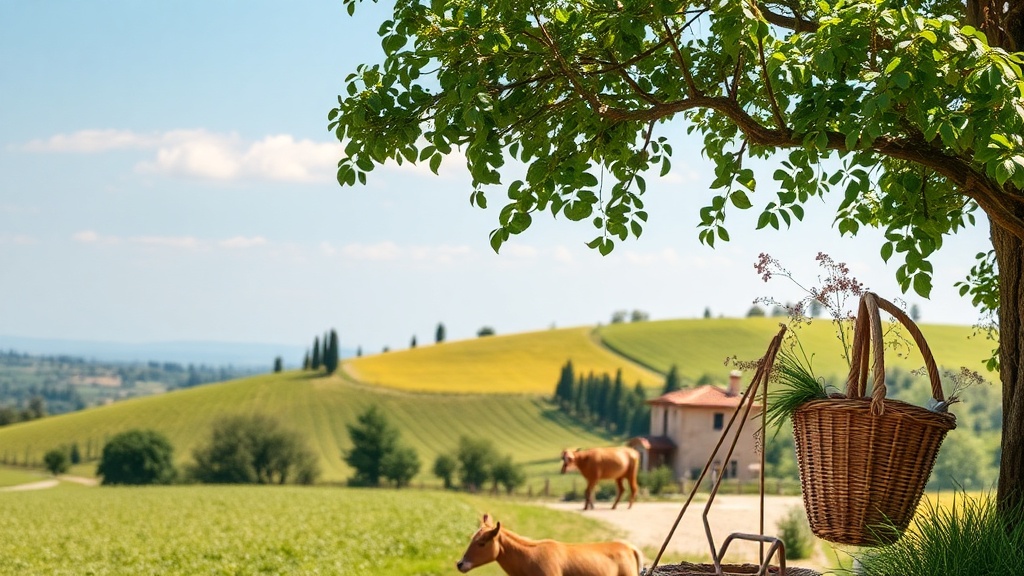

Orvieto is the first thing most visitors see of Umbria, from the train or the motorway between Rome and Florence: a walled town on top of a sheer-sided rock. The rock is tufa, a soft volcanic stone, and it gives its character to the whole southwestern corner of the region. Farms here sit on a plateau and in a river valley rather than on hillsides, and the days are organised around a white wine, a reservoir lake and a cathedral facade that is worth the trip on its own.
A City Carved From Its Own Rock
The rock is a slab of volcanic tuff roughly a kilometre and a half long, left standing when the softer clay around it eroded away. Etruscans, Romans and medieval Orvietani dug into it, and the town is honeycombed with over a thousand cellars, wells and pigeon lofts, open on short underground tours. The Pozzo di San Patrizio, sunk in the 1520s for Pope Clement VII, is the showpiece: 53 metres deep, with two spiral staircases wound around each other so that donkeys going down never met donkeys coming up.
The practical way in is the funicular from the railway station at the foot of the rock, which takes three minutes and lets you leave the car below. Walk the edge of the rock at least once; from the ramparts you can see all of the country described below.
The Facade and the Chapel
Orvieto’s cathedral was begun in 1290 and its facade, largely the work of the Sienese architect Lorenzo Maitani in the early 1300s, is the reason people cross the region to see it. Four piers of carved marble relief run from Genesis to the Last Judgment at eye level; above them, gold-ground mosaics fill every gable and spandrel and catch the low sun in late afternoon, which is the time to stand in the square.
Inside, the San Brizio chapel holds Luca Signorelli’s frescoes of the end of the world, painted between 1499 and 1504: the preaching of the Antichrist, the resurrection of the flesh, the damned herded by demons. The chapel needs a separate ticket; go in the morning. The cathedral also keeps the Corporal of Bolsena, the relic behind the feast of Corpus Domini, which Orvieto carries in procession in June.
Orvieto Classico and the Vineyards on the Tufa
The vineyards begin at the foot of the rock and spread west and south over low tufa ridges. Orvieto has been a white-wine town since the Middle Ages; the modern DOC blends Grechetto with Procanico, the local name for Trebbiano, and the Classico zone is the historic core around the town. The wine most farms serve is dry, pale, faintly bitter at the finish and made for the local table: it goes with the lake fish, the fresh pecorino and the wild boar of the district.
The older tradition is sweet. Autumn fog off the Paglia river encourages noble rot in the vineyards below the town, and a few growers still make a late-harvest Muffa Nobile wine that is honeyed, dense and rare. Farms in the Classico zone sell the dry wine at €6 to €12 a bottle; a cellar visit with a tasting of three or four wines generally costs €15 to €30.
Lake Corbara and the Alfina Plateau
East of Orvieto the Tiber has been dammed to form Lake Corbara, a long reservoir built in the early 1960s that fills a bend of the river below the town of Baschi. It is not a swimming lake, but the road along its southern shore and the gorge of the Forello, where the Tiber cuts through the hills at the head of the lake, are the quietest scenery in the district.
North and west of Orvieto the ground rises to the Alfina plateau, a rolling upland at 500 to 600 metres between Castel Giorgio, Castel Viscardo and Allerona, near the border with Lazio and Tuscany. This is grazing and grain country rather than vines: oak woods, sheep and a few Chianina cattle. Castel Viscardo has made handmade terracotta bricks and tiles from the local clay for centuries, and the kilns still run. Farms up here are cooler and more isolated than those around the town, and better for walking and riding.
Across the Border: Civita di Bagnoregio
Twenty minutes south, just inside Lazio, Civita di Bagnoregio stands on its own crumbling pinnacle of tufa above a landscape of grey clay ravines called calanchi. The only way in is a concrete footbridge from the town of Bagnoregio; the village has a few dozen residents, and an entrance fee of a few euros goes towards keeping the rock from falling away. Go early on a weekday, before the midday crowds, from an Orvieto farm and you will have the bridge nearly to yourself, and the view back across the calanchi is the reason to come.
Where the Farms Sit, and When to Go
The farms of this corner fall into three kinds. Below the rock and along the Paglia are the wine estates, low stone buildings among the vines with the cathedral visible from the terrace. On the Corbara side are smaller mixed farms with olives, sheep and a view of the water. On the Alfina plateau are the old grain and livestock holdings, larger, plainer and often with horses. Across the district, expect a double room at €75 to €150 a night and dinner where offered at €28 to €45 with the house Orvieto.
- April to June — green vineyards, wild flowers on the plateau, the Corpus Domini procession, no heat yet.
- July and August — hot on the rock and in the valley; sleep on the plateau and see the square after seven in the evening.
- September and October — the harvest, cellars open, morning fog on the Paglia, porcini in the plateau woods.
- November to March — empty and often grey; new oil and winter menus are the compensation, and a jazz festival fills the town around New Year.
Above the Cliffs
A farm stay near Orvieto trades the intimacy of the central valleys for scale: a rock in the middle distance, a lake below, a plateau behind, and a border with two other regions within half an hour. It suits visitors who want one great building, one great wine and a landscape they can drive across in a morning. Book the farm for the view it has of the rock, and plan the days around the light on the facade.
