
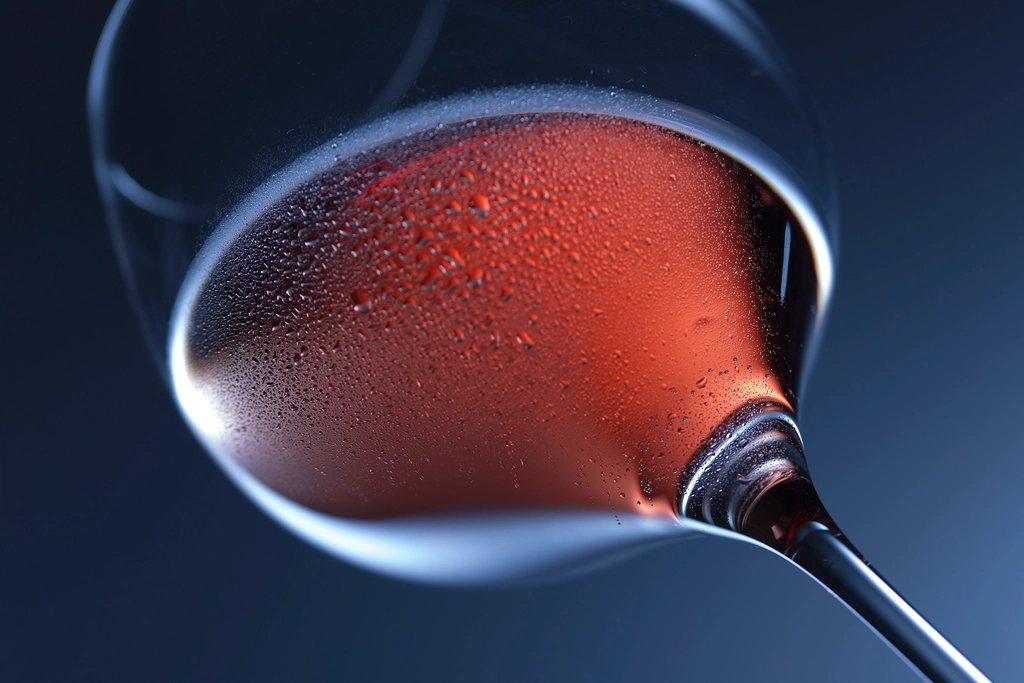

Ask for a glass of red on a farm around Montefalco and the bottle that arrives will almost certainly be Sagrantino. It is the wine the region is proudest of and the one most visitors misjudge, because it is unlike the softer Sangiovese-based reds of Tuscany an hour to the west. Sagrantino is grown almost nowhere else in the world, it carries more tannin than nearly any other red grape, and it comes in two forms that share a name but not a purpose. This is what a guest at a farm table needs to know before the cork comes out.
A grape that belongs to one hill
Montefalco is a walled town at 473 metres on a ridge above the Valle Umbra, with views across to Assisi, Spello and the Sibillini on a clear day. The Sagrantino vine has been recorded here since the sixteenth century, and its name is usually traced to its early use as a sacramental wine or to the friars who tended it. For most of that history it was made only as a sweet wine from dried grapes; the dry version is a modern idea from the 1970s, and it was only in 1992 that Montefalco Sagrantino was granted Italy’s highest classification, the DOCG.
The production zone is small: the commune of Montefalco and parts of Bevagna, Gualdo Cattaneo, Castel Ritaldi and Giano dell’Umbria. Vineyards sit between roughly 220 and 470 metres on clay and limestone slopes that drain well and catch long afternoon sun. Total plantings are measured in a few hundred hectares, which is one reason the wine is rarely cheap and rarely found far from home.
Why the tannins are so strong
Sagrantino berries are small and thick-skinned, and the skins carry an exceptional load of polyphenols, the compounds that give a red wine its colour, its grip and its ability to age. Laboratory measurements regularly place Sagrantino at the top of the table among Italian varieties, above Nebbiolo and Aglianico. In practice that means a young dry Sagrantino can feel astringent, drying the gums and the sides of the tongue, in a way that surprises people used to Merlot.
The winemakers manage this in two ways. The grapes are picked late, often into the second half of October, so that the tannins are fully ripe and rounded rather than green. And the wine is held back: the rules require a minimum of 37 months of ageing before release, at least 12 of them in wooden barrels and a few in bottle. Even after that, most producers and most farm hosts will tell you the wine is better at eight or ten years than at four. The reward for patience is a deep, almost black wine with blackberry, plum, dried fig, black pepper and a smoky, earthy finish that lasts a long time.
Secco versus passito
The dry wine, labelled secco, is the one most people mean today. It must be made entirely from Sagrantino, reaches at least 13 percent alcohol and is usually closer to 14.5, and it is built for meat and for winter. The sweet wine, labelled passito, is the historical original. After the harvest the bunches are laid out on racks or mats in ventilated rooms for at least two months, losing water and concentrating sugar, before they are pressed and fermented. The result is a dessert wine of 14 to 16 percent with the same fierce tannin behind the sweetness, which is why it tastes nothing like a soft, syrupy sweet red. Think of dried cherries, cocoa and orange peel with a bitter, grippy edge.
There is also a third bottle on many farm tables: Montefalco Rosso, a blend in which Sangiovese leads and Sagrantino plays a supporting role of between 10 and 25 percent. It is released younger, drinks more easily and costs less, and it is what a family here pours on an ordinary Tuesday. If the full Sagrantino feels too much on a warm evening, the Rosso is not a lesser choice, only a different one.
The harvest season on a farm
Grape picking in the Montefalco hills generally begins with the white Grechetto and Trebbiano in early September, moves to Sangiovese in the second half of the month, and finishes with Sagrantino in October, sometimes as late as the end of the month when the autumn has been cool. A farm stay in the first three weeks of October puts you in the middle of it: tractors with trailers of black fruit on the lanes between Montefalco and Bevagna, the smell of fermentation from open cellar doors, and passito grapes already laid out in the drying rooms. Many farms let guests join a morning of picking, which is heavier work than it looks and is rewarded with a long lunch.
How to taste it at the table
Sagrantino repays a little ceremony. Ask your host to open the bottle an hour or two before dinner, or to decant it; the air softens the tannin noticeably. Serve it at cellar temperature, about 16 to 18 degrees, not at the warmth of a summer kitchen, and use a large glass so the aromas have room. Take the first sip with food rather than before it, because fat and protein tame the astringency and the wine suddenly makes sense. Do not judge the wine by the first glass. With passito, serve it a few degrees cooler and pour small measures; it is a wine for the end of a meal, not the middle.
- Secco: 100 percent Sagrantino, at least 37 months of ageing, 12 in wood; deep, dry, powerfully tannic; best from 6 to 15 years after the harvest.
- Passito: the same grape dried for at least two months; sweet but grippy, 14 to 16 percent; drink with cheese or dark chocolate.
- Montefalco Rosso: a Sangiovese-led blend with 10 to 25 percent Sagrantino; the everyday bottle.
What to eat with it
The pairings are not complicated because the local kitchen grew up alongside the wine. Dry Sagrantino wants fat, salt and time on the fire: lamb roasted with rosemary, wild boar stewed with juniper, a whole roast pork scented with wild fennel, or the thick hand-rolled pasta of the region dressed with a slow meat sauce. Aged pecorino from the Sibillini pastures works, and so do lentils from Castelluccio cooked with sausage. Grilled beef is the classic on a farm with its own cattle. What it does not want is fish, tomato-heavy sauces or anything delicate.
Passito belongs with the end of the meal. Locally that means aged cheese with a spoon of chestnut honey, a slice of the ring-shaped dry cake baked for the feast days, or simply a square of dark chocolate, which echoes the cocoa in the wine. Taken on a farm terrace in October, with the vineyards below already turning yellow and the first woodsmoke in the air, a small glass of it explains why this grape was kept alive for four hundred years on a single hill.
Read next: Torta al Testo: Umbria's Farm-Kitchen Flatbread and How to Order It
