

A weekend around the lake rewards a slower plan: pick a base, mix a town or two with the water, and leave room for long lunches. This guide sets out what the lake is like, what to combine, and how to decide where to spend your time.
- The lake is large but very shallow, and its shoreline is dotted with small historic towns that suit short, unhurried visits.
- The islands are reached by ferry from several points; allow half a day for the main one.
- Eat simply and locally: griddle bread at a roadside spot, lake fish and Umbrian sweets.
What kind of lake is Lake Trasimeno, and how does that shape a visit?
It is almost 15 km across and its shoreline runs for 53 km. That is big enough to need a plan, but gentle enough that you never feel you are crossing a wild landscape.
The defining feature is how shallow it is. The average depth stays below 6 metres, and the lake has no significant natural outlet, so it depends on rainfall. The water level moves noticeably from season to season, usually lowest after summer and highest in spring. In practice this means the shoreline can look quite different depending on when you come, and beaches or jetties may sit further from the water in a dry autumn.
The lake and its surroundings are protected as a regional park, created in 1995, because the shallows support migratory birds, fish and grassy lake beds. For a visitor, that translates into quiet shores, reed edges and a landscape that suits walking, cycling and slow boat trips more than fast, noisy activities.
Warm weather also affects how you plan. The lake moderates the climate, and from May to September the water is warm enough for swimming. If you want to swim, aim for that window; if you prefer cooler walking conditions, the shoulder months make more sense. Check recent weather and lake conditions before you commit to a swim.
Which shore towns are worth pairing into a weekend?
The lake is ringed by small towns, and trying to see all of them is the quickest way to spoil a slow weekend. Choose two or three and let the rest go. These are the ones most often recommended, with what each offers.
- Passignano sul Trasimeno: a lively lakeside town with a medieval fortress and an old harbour. It works well as an end-of-day stop for a coffee, a gelato and a walk as the light changes over the water. There is also a park beside the lake that suits families.
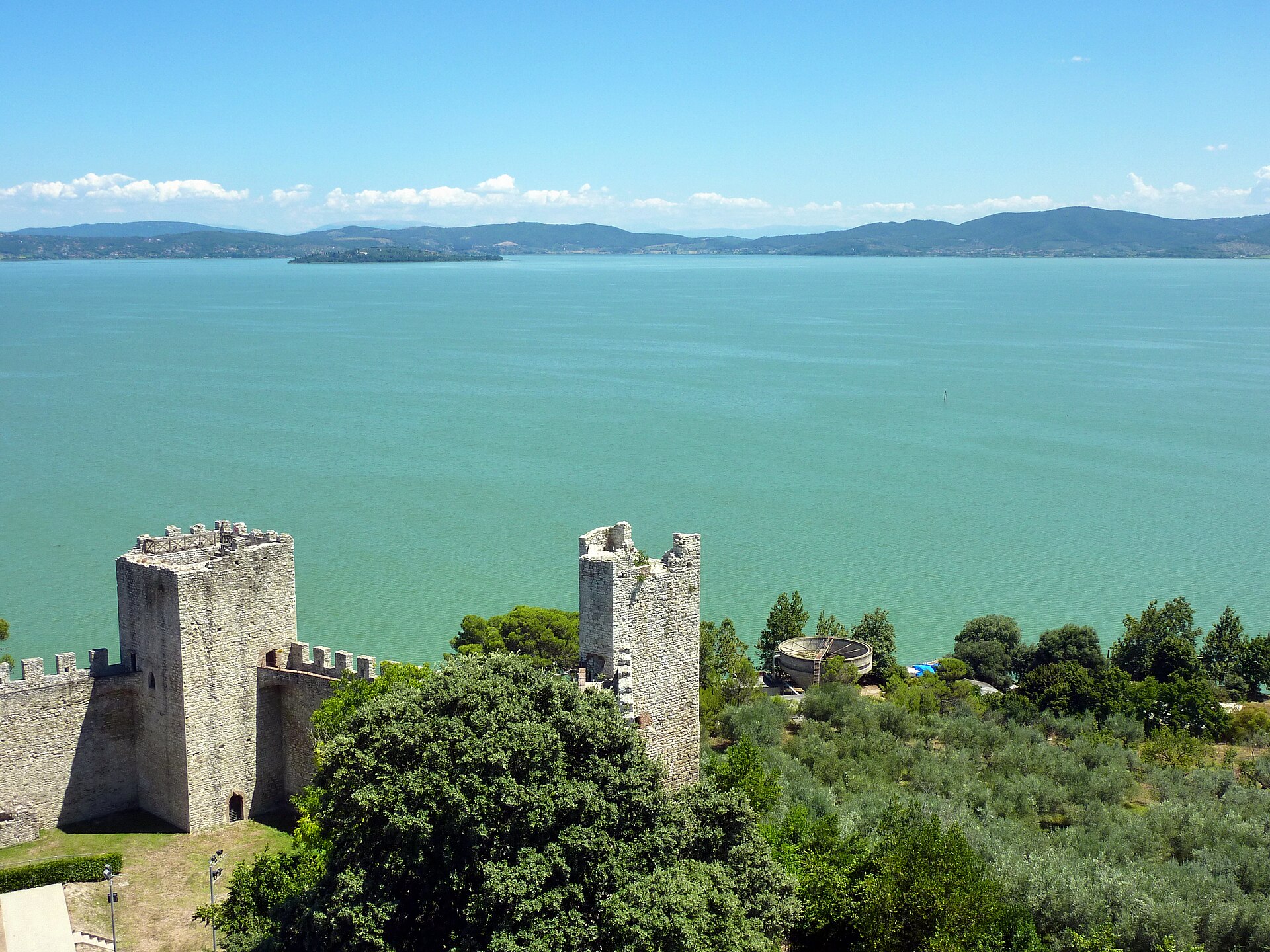
- Castiglione del Lago: a fortified village with a wide view over the water. The Renaissance Palazzo della Corgna and the medieval Rocca del Leone are the main sights.
- Tuoro sul Trasimeno: a practical ferry departure point for the islands, with a church and an art installation on the shore.
- Magione: known for its castle linked to the Knights of Malta.
Two hill towns sit just back from the water and fit neatly into a morning before you reach the lake: Panicale and Città della Pieve. Both are small enough to cover quickly, with alleys, churches, valley views and a piazza for coffee. Città della Pieve is known for the narrowest alley in Italy.
A sensible pattern is one hill town in the morning, a long lunch, then an afternoon on the lake road with stops wherever the view invites you. Because the road follows the perimeter and the water appears and disappears between trees, you can improvise instead of booking every hour.
How do you reach the islands, and how much time should you give them?
Three wooded islands rise from the lake. Isola Maggiore and Isola Minore lie in the north, opposite Tuoro and Passignano, while Polvese, the largest, is on the opposite side. For most weekends, the main island is the one to build a plan around.
Ferries run to the islands from different points around the lake, and Tuoro is one of the main departure towns. The crossing to the main island takes about 45 minutes, and you should set aside half a day for the visit. That makes it a natural morning outing, leaving the afternoon free for lunch and a ride or walk on the shore.
Ferry timetables change with the season and are not fixed in the sources used here, so do not rely on a remembered schedule. Before you travel, check the current timetable with the operator or the local tourist office, confirm the last return sailing, and decide whether you are leaving from Passignano or Tuoro. If you travel in September, ask whether any family events are on at the island, since a children’s event has been held there in that month.
If the water is the point of your trip, think about how you want to use it. Besides ferries, the lake supports kayaking, canoeing, windsurfing and kite surfing. Those are better matched to confident, active visitors, while ferries and shoreline walks suit everyone else.
What should you eat, and where does a farm fit in?
The lake’s food is split between land and water, and a good weekend uses both. For a simple lunch, choose a plain local place over a waterfront restaurant. One recommendation near the lake is Faliero, a modest address favoured by locals and by truck drivers. Its signature dish is torta al testo, a flatbread cooked on a griddle in the Umbrian tradition and stuffed with vegetables, cheese or cured meats. Portions are generous, which suits a morning of walking.
For something sweet, look for the torciglione, a traditional dessert associated with the lake. Fish from the lake is the other local calling card, since the shallow water is rich in species such as pike, carp and tench. Ask what is on the menu that day rather than assuming a particular dish will be available.
A farm stay or farm dinner is where the food side of the trip comes together. The region around the lake offers farmhouses alongside hotels, campsites and rooms, and farm visits, wine tasting and tastings of typical products are among the activities on offer. When you choose, ask these practical questions:
- Is dinner served on the farm, and does it need to be booked in advance?
- Which products come from the farm itself, such as oil or wine?
- How far is the nearest ferry point or shoreline path from where you sleep?
- Is the place suitable for children, if you are travelling with them?
If you plan to ride a bike, remember that distances around a lake of this size add up, so decide in advance whether you want a short loop or a longer stretch, and where you will stop to eat.
Related reading
- Spoleto and the Valnerina: Farm Stays Between the Gorge and the Mountains
- Discovering Umbrian Truffle Country on Scenic Rural Trails
Sources
- Lago Trasimeno, Umbria: Italy’s most underrated lake (nice2stay.com, accessed 2026-11-02)
- Trasimeno lake in Umbria. Nature and fun (umbriaconme.com, accessed 2026-11-02)
- Umbria: the Lake Trasimeno (dreavel.com, accessed 2026-11-02)
- Lake Trasimeno — Wikipédia (en.wikipedia.org, accessed 2026-11-02)
Photo: Castiglione del Lago, Lago Trasimeno, by Adbar, CC BY-SA 3.0 (Wikimedia Commons)
